
There are two kinds of verbs: finite verbs and non-finite verbs. 动词分为限定性动词和非限定性动词。Finite Verbs:Finite verbs must agree with the number and person of its subject and they also show tense. 限定性动词又叫谓语动词,在句中充当谓语,在人称和数上必须和主语保持一致,有时态变化。
★ Andy likes running in marathons.Take the verb LIKE, it agrees with the subject Andy and it shows us the simple present tense.例句中动词LIKE与主语Andy人称和数一致,使用的是一般现在时。
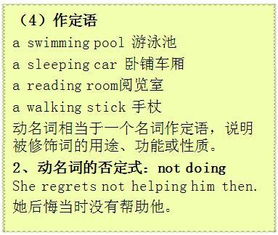
Non- Finite Verbs:Non-finite verbs are not bound by person or number of the subject and they do not show tense. There are three types of non-finite verbs: gerunds, infinitives and participles.非限定性动词也叫非谓语动词,在句中不可单独作谓语,不受主语的人称和数的限制,也不能决定时态的变化。非限定性动词分三种:动名词、不定式和分词。Gerunds:◆ Gerunds are verbs that function as a noun and are formed by adding -ing to the base form of a verb. ◆ 动名词是由动词变化而来,是动词作名词的一种形式。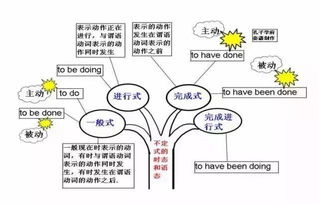
◇ 一般情况下:原形动词词尾直接 + ing read - reading◇ 动词以不发音e结尾:去e + ing dance - dancing◇ 动词以重读闭音节结尾:双写词末辅音字母 + ing cut-cutting◇ 动词以ie结尾:变ie为y + ing lie - lying◆ Just like nouns, gerunds can be used in many different situations. They can be used◆ 跟名词一样,动名词在句中可以作不同的成分。
◇as the subject作主语:◇ You can use a gerund when you want to use a verb as the subject of a sentence or a phrase.◇ 如若想用动词作为一个句子或短语的主语时,通常使用动名词。★ Smoking in public areas should be banned. ★ 应该禁止在公共场所吸烟。★ Sailing around the world is an adventure.★ 环球航行是一种冒险。
★ Eating too much sugar is bad for your teeth.★ 吃太多的糖对牙齿不好。★ Swimming is good for your body.★ 游泳有益身体健康。
★ Eating in class is not allowed.★ 不允许在课堂上吃东西。
★ Volunteering is a great way to give back to your community.★ 做志愿者是回馈社会的好方式。★ Eating fruits and vegetables is important for a healthy diet.★ 多吃水果和蔬菜于健康饮食十分重要。◇ 动名词常在“It is no use/no good/fun/a waste of time/a good pleasure等名词 + doing”结构中作主语,IT为形式主语。
★ It's no good trying to talk me out of leaving.★ 想说服我不离开,没用。★ It’s no use leaving a message, she never calls back anyway.★ 留言也没用,她从不回电话。★ It is a waste of time seeing that movie.★ 看那部电影是浪费时间。◇ 动名词也可在“There is no + doing”结构中作主语。
★ There is no standing still in this life; one must either advance or fall behind.★ 在这样的生活中没用静止不动的。一个人要么前进、要么后退。★ There is no denying that she is very efficient.★ 她效率高是不可否认的。◇as the object 作宾语:◆ There are many common verbs and verb phrases that take gerunds as objects.◆ 有许多常见的动词和动词短语只能跟动名词作宾语。
★ Andy detested being photographed. ★ 安迪非常讨厌拍照。★ She loathed being the child of impoverished labourers. ★ 她憎恨自己是贫困工人的孩子。★ Do you fancy going out this evening ★ 今晚你想不想出去?★ She imagined walking into the office and handing in her resignation.★ 她想象着自己走进办公室,递上辞呈。★ It was an unpopular decision to postpone building the new hospital.★ 延迟兴建新医院的决定不得人心。
★ He proposed changing the name of the company.★ 他建议更改公司的名称。★ I can't recall meeting her before.★ 我想不起来以前曾经见过她。★ He bitterly resents being treated like a child.★ 他十分厌恶被别人当孩子对待。
★ The bank strongly resisted cutting interest rates.★ 银行强烈反对降低利率。★ He put off making a decision till he had more information.★ 在获得详情之前,他没有急于做出决定。★ I can’t stand working with people who always show up late.★ 我无法忍受与那些总是迟到的人一起工作。
◇after prepositions and prepositional phrases 介词或介词短语之后,使用动名词:★ Before completing university, she already had several job offers.★ 在大学毕业之前,她已经得到了多份工作邀请。★ You should study instead of watching TV.★ 你应该学习,不应该看电视。★ We are looking forward to making a trip to the Great Wall.★ 我们正期待着到长城一游。★ She walked out of the room, without saying a word.★ 她走出了房间,一句话也没说。
★ I have been thinking of him nonstop since meeting him.★ 自从见过他之后,我就不停地想着他。★ He hates all forms of creative expressions except writing.★ 除了写作,他讨厌所有形式的创造性表达。★ After recovering from his injury, Andy retired from rugby.★ 伤愈后,安迪退出了橄榄球运动。
★ In spite of training for years, she got knocked out of the tournament in the first round.★ 尽管训练了多年,她在第一轮就被淘汰出局。★ I’m fed up with asking you to be quiet.★ 我已经厌倦了要求你保持安静。◇ 在“have difficulty/trouble/problem/a hard time/a good time + doing”,“be busy + doing”,“waste/lose time + doing浪费时间做某事”,“There is no point + doing做某事没有任何意义”等结构中,IN常省去。 ★ Twins often have difficulty expressing themselves verbally. ★ 双胞胎往往有言语表达方面的困难。
★ The children are busy doing their homework.★ 孩子们忙于做作业。★ There is no pointing in taking your jacket, it’s really hot outside.★ 带上外套没用必要,外面真的很热。◇ How about doing… / What about doing… ★ How about listening to classical music ★ 听点古典音乐怎么样?★ What about going for a walk after supper ★ 晚饭后去散步如何?◆ We use GO + a gerund when we’re talking about hobbies or recreational activities.◆ “GO + 动名词”来谈论爱好或娱乐活动。
★ go hiking 去徒步旅行★ go swimming 去游泳★ go fishing 去钓鱼★ go shopping 去逛街★ go sightseeing 去观光动名词的逻辑主语:◆ 当动名词的逻辑主语与句子的逻辑主语不一致时,要在动名词之前加上形容性物主代词或名词所有格,作为其逻辑主语。★ Andy’s being careless caused so much trouble.★ 安迪的粗心引起了诸多麻烦。★ Can you imagine his saying such a thing ★ 你能想象他说出这样的话吗?★ Cathy’s going there is of no help.★ 凯西去那儿也没什么用。动名词的完成时态:having done◆ 如果强调动名。